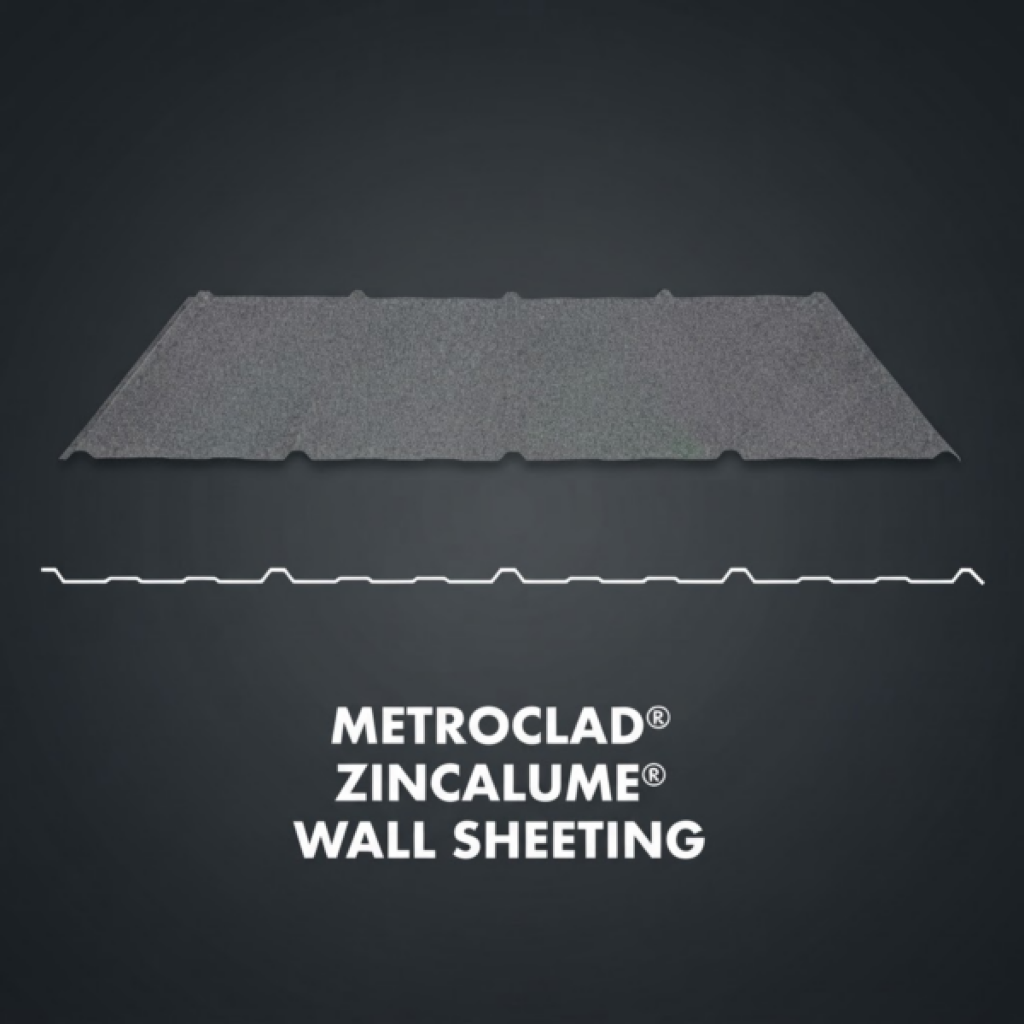
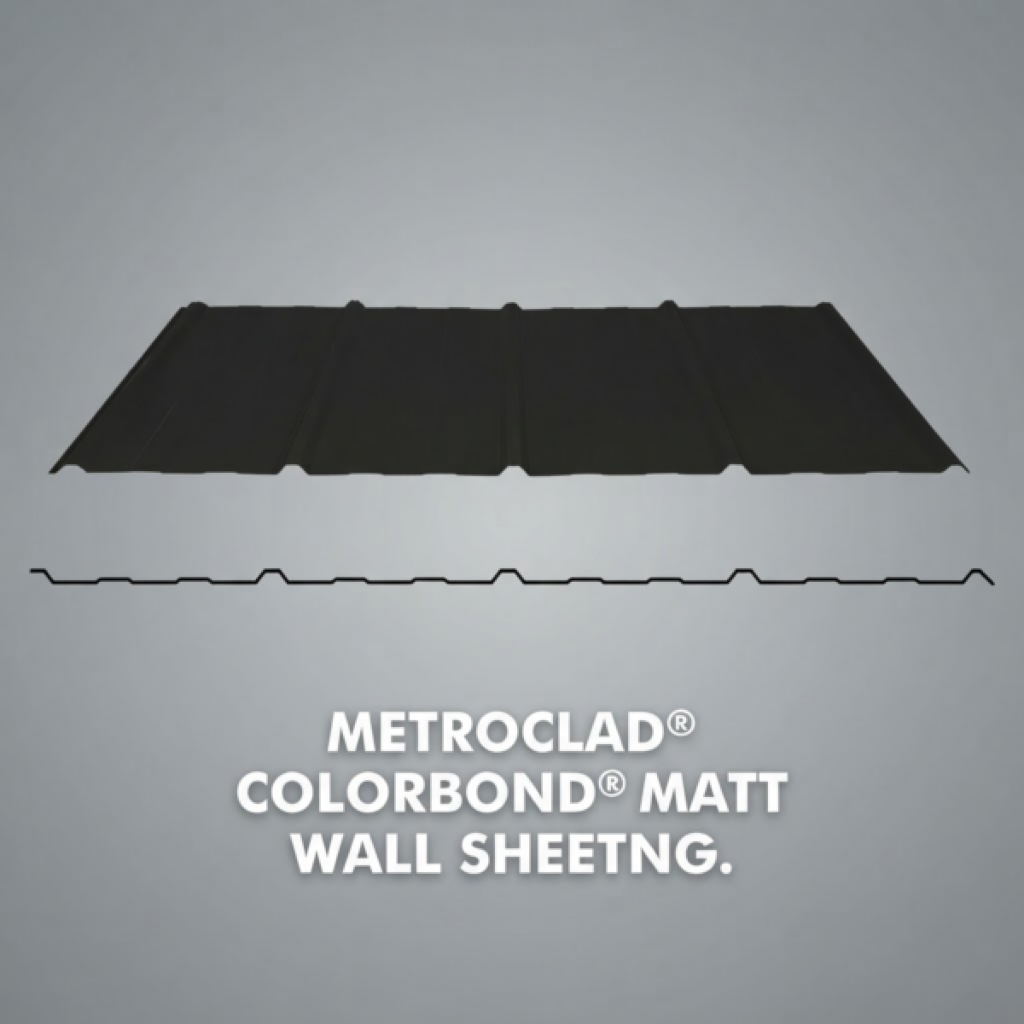
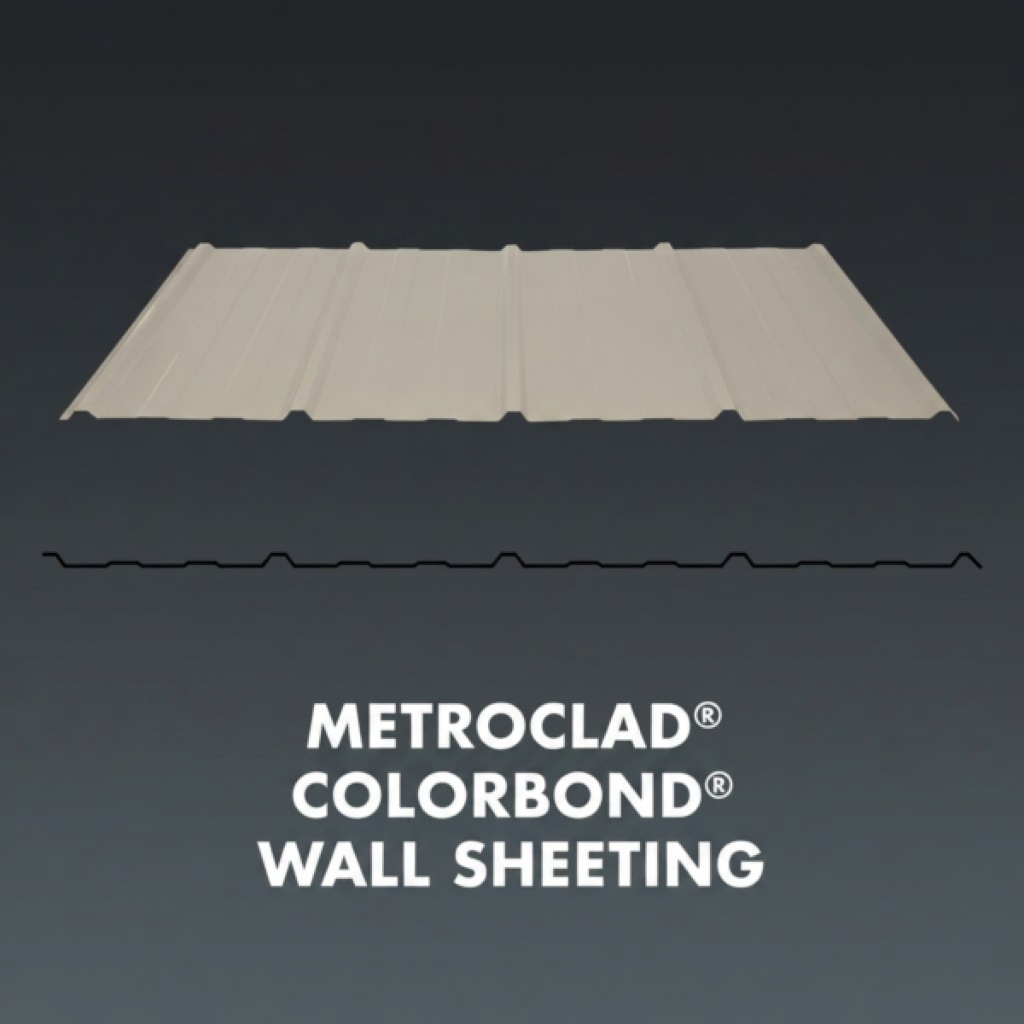
Metroclad®️ is a low rib, custom length, high tensile, wide coverage steel walling.
Product Categories

Crafted from high-quality COLORBOND steel, COLORBOND steel METROCLAD Roof and Wall Sheeting is designed to deliver exceptional durability and longevity. With its clean lines and smooth finish, this roofing and cladding solution offers a sleek and contemporary aesthetic that is perfect for a wide range of architectural styles.Whether you’re looking to update the look of your home or create a striking visual statement with your commercial building, COLORBOND steel METROCLAD Roof and Wall Sheeting is a perfect choice. With a wide range of stylish colour options to choose from, you’re sure to find the perfect hue to complement your design aesthetic!Choose COLORBOND steel METROCLAD Roof and Wall Sheeting for a roofing and cladding solution that offers a great mix of style and substance. Whether you’re building a new home or updating your commercial building, METROCLAD is the perfect choice for a sleek and sophisticated finish that will stand the test of time!

What are the differences between Trimclad and Trimdek roofing?

Trimclad and Trimdek are both names used in the Australian market for the same broad style of roofing, a trapezoidal, exposed fastener profile with wide flat pans and ribs running the length of the sheet. COLORBOND steel METROCLAD Wall Cladding on this page is a related trapezoidal style, so if you are comparing profiles it helps to look at cover width, rib height and base metal thickness rather than the brand name alone, since these vary slightly between suppliers. Functionally, sheets sold as Trimclad and Trimdek fix and perform in a very similar way once installed to the same fixing schedule. Check the specification sheet for the exact product you are quoting to confirm cover width and thickness before comparing prices.

What roof pitch is required for a five-rib profile?

Five-rib, exposed fastener trapezoidal profiles such as the Metroclad range generally need a minimum roof pitch of around 5 degrees, in line with common industry guidance for this style of sheeting, though the exact figure depends on sheet length and end lap detail. COLORBOND steel METROCLAD Wall Cladding and COLORBOND MATT Wall Cladding – Metroclad follow the same fixing principles as other exposed fastener five-rib profiles. Steeper pitches generally give a wider safety margin against wind driven rain at the laps. Always confirm the minimum pitch for your specific span and location against the current manufacturer data and AS 1562.1.

How much fall does five-rib sheeting need?

Five-rib sheeting needs enough fall to shed water quickly and stop it backing up at the laps, which in practice usually means a minimum pitch of around 5 degrees for this exposed fastener style. COLORBOND steel METROCLAD Wall Cladding is designed as a five-rib profile primarily for walls in this range, but the same fall principles apply wherever a similar profile is used on a roof. Longer sheet runs and higher rainfall areas generally call for more fall, not less, to keep water moving off the roof. Check the current technical data for the exact profile and length you are using, and confirm against AS 1562.1 for your project.

What width does a five-rib sheet cover?

Five-rib trapezoidal profiles like Metroclad commonly cover around 762mm per sheet once overlapped, though the precise cover width can vary slightly between suppliers and should be confirmed on the current product listing. COLORBOND steel METROCLAD Wall Cladding, ZINCALUME Wall Cladding Metroclad and COLORBOND MATT Wall Cladding – Metroclad are all sold with their exact cover and total sheet width shown on the product page so you can calculate quantities accurately. Ordering to the correct cover width matters for working out how many sheets you need across a wall or roof. If you are unsure, ClickSteel’s product pages let you enter your measurements to estimate the sheet count.

How many screws per sheet does five-rib roofing need?

The number of fasteners per sheet for an exposed fastener five-rib profile depends on the wind classification, purlin spacing and sheet length for your project, and is set out in the manufacturer’s fixing tables rather than a single fixed number. COLORBOND steel METROCLAD Wall Cladding is generally fixed at specified rib crests into each purlin, with additional fasteners at end laps and edges. Under fixing is one of the most common causes of wind related roofing failure, so it pays to follow the current fixing schedule rather than guess. Your roofer or the product’s technical data sheet will confirm the correct fastener pattern and spacing for your specific span and wind region.
Flat Rate Shipping
Fast & Easy Delivery
100% Secure Checkout