





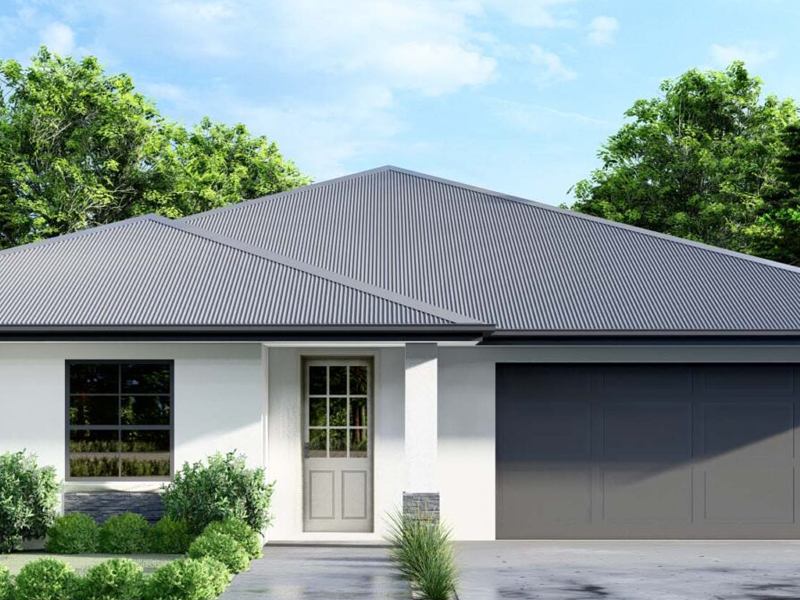
Corrugated roof sheets are a classic Aussie choice for sheds, patios, garages and homes because they are strong, lightweight, and quick to install when you get the setup right. This guide walks you through the full process for installing CORODEK corrugated roofing made from genuine COLORBOND steel, including measuring, sheet layout, fixing, laps, and flashings.
If you are ordering sheets, ClickSteel’s CORODEK profile specs are a 762 mm cover with 16 mm sheet height, in 0.42 mm or 0.48 mm BMT, with a minimum roof pitch of 5 degrees.
Before you start: non-negotiables that prevent leaks
1) Confirm your roof pitch
Corrugated roofing needs a minimum 5 degree pitch (1 in 12).
If your “flat roof” is below that, do not force corrugated sheets onto it. ClickSteel calls out that low-pitch roofs need the right profile choice, rather than pushing corrugated beyond its limits.
2) Use compatible materials (this matters more than people think)
ClickSteel’s guidance is simple:
- Use exterior-rated Class 4 roofing screws
- Use neutral-cure silicone that is safe for pre-painted steel
- Keep copper and lead away from the sheets, and avoid water runoff from copper or lead onto the roof
- Avoid acid-cure silicone
3) Plan for safe working
Work on dry days and use the basics like gloves, eye protection, and fall protection where required.
Corrugated sheet basics (what to measure and order)
Sheet widths
CORODEK corrugated sheets have a cover width of 762 mm.
This is the number you use to estimate sheet count.
Sheet thickness options
ClickSteel supplies corrugated CORODEK in 0.42 mm and 0.48 mm BMT.
Support spacings (your battens/purlins)
The CORODEK specs list maximum roofing spans (based on N2 wind category and 1.5 mm substrate):
- 0.42 mm BMT: end span 900 mm, internal span 1200 mm
- 0.48 mm BMT: end span 1300 mm, internal span 1700 mm
If your frame does not suit these spans, fix that first. Roofing performance starts with structure.
Overhang into the gutter
CORODEK overhangs have a minimum length of 50 mm.
When you measure sheet length, allow for this.
Tools and materials checklist
- Corrugated sheets: COLORBOND steel Corrugated Roof Sheeting or CORODEK ZINCALUME steel Roof Sheeting
- Fasteners: roof and wall (crest fix) screws with EPDM washers, suited to your support type
- Side-lap fasteners: only where required (screws or sealed blind rivets)
- Sealants: neutral-cure silicone or butyl tape where sealing is required
- Flashings: Roofing accessories and Roof flashings, sized to the profile
Step-by-step: How to install corrugated roof sheets
Step 1: Measure properly (so sheets arrive ready to install)
- Measure roof length (ridge to fascia line).
- Add the required gutter overhang, with 50 mm as the minimum.
- Measure roof width (across the building).
Quick sheet count estimate:
Roof width (mm) ÷ 762 mm = approximate number of sheets (round up).
Allow extra for your lap setup and any cutting waste.
Step 2: Set your laying direction (this stops wind-driven leaks)
Always face side laps away from the prevailing weather.
That means you start from the opposite end to where the worst weather hits, and work towards it.
Step 3: Dry-lay and check your setout
Before fixing anything:
- Put the first sheet in position and square it to the roof edge.
- Check the sheet sits correctly over supports.
- Confirm your overhang into the gutter looks right.
This first sheet controls every sheet after it.
Step 4: Fix the first sheet (use the CORODEK fastener guidance)
CORODEK can be fixed to timber or steel supports, and the spec provides fastener options based on support type.
For roof applications, CORODEK fasteners are listed as roof and wall (crest fix) options with EPDM washers.
The spec also notes CORODEK may be fixed with 3 or 5 fasteners per sheet to meet the values shown in the manual, and to use screws to AS 3566.1 (or better).
Practical install tip: drive fasteners straight and consistent so the washer seals properly. Also avoid over-tightening.
Step 5: Continue laying sheets and manage side laps
- Lay the next sheet with the side lap set correctly.
- Only use side-lap fasteners where required (the spec lists options including #10 x 16 screws with EPDM washers or sealed blind rivets).
If your roof pitch is low, sealing becomes more important. CORODEK guidance notes side laps only require sealing in certain curved roof cases where pitch is lower than 5 degrees, reinforcing that pitch rules matter.
Step 6: Flashings and sealing at roof junctions
At ridges, barge edges, valleys, and wall junctions, flashings are what make the roof watertight.
ClickSteel’s flashing guide recommends:
- Fixings (screws or rivets) at 200 to 300 mm spacing
- Minimum 100 mm overlaps
- Sealing with neutral-cure silicone or butyl tape on laps and penetrations
For cutting flashings, ClickSteel recommends tin snips or a nibbler and avoiding angle grinders to protect the coating.
Internal link spots: Roof flashings, ClickSteel Flashing Designer, Roofing accessories.
Step 7: Allow for thermal movement on long roofs
Metroll’s CORODEK guide notes thermal expansion and recommends maximum sheet runs of:
- Dark colours up to 17 m
- Light colours up to 24 m
If your roof runs longer than that, plan for the right detailing (this is where a pro is often worth it).
Common mistakes to avoid
- Installing corrugated on a roof below 5 degrees pitch
- Mixing incompatible materials like copper or lead near the roof, or letting runoff discharge onto the sheeting
- Using acid-cure silicone
- Cutting with angle grinders and damaging the coating
FAQs: Corrugated roof sheets installation
Can you use corrugated sheets on a flat roof?
Only if the roof still meets the minimum pitch. Corrugated CORODEK is specified for 5 degrees minimum. If your roof is flatter than that, choose a profile designed for lower pitch.
How much overlap on corrugated roofing sheets?
You need side laps and flashing overlaps that suit the profile and application. For flashings, ClickSteel recommends minimum 100 mm overlaps and sealing on laps where required.
How do I calculate corrugated roof sheets?
Use the CORODEK cover width: 762 mm cover per sheet. Roof width ÷ 762 mm gives an estimate, then round up and allow for laps and waste.
How do you install corrugated roofing sheets on timber or steel?
Use the CORODEK fastener guidance for your support type. The spec lists roof and wall crest-fix screw options with EPDM washers for timber and steel supports.
What sealant should I use?
ClickSteel recommends neutral-cure silicone that is safe for pre-painted steel, and to avoid acid-cure silicone.
What should I keep away from COLORBOND roofing?
ClickSteel calls out copper and lead (and runoff from them), acid-cure silicone, wet green or treated timber sitting directly on steel, ponding water, and mixed unknown screws