What is the standard size for a fascia board?
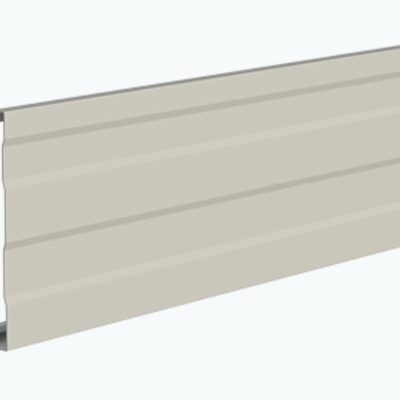
There’s no single standard size, fascia board comes in a range of heights and thicknesses to suit different eaves and gutter setups. ClickSteel’s Metroline range includes the COLORBOND steel Fascia Board, ZINCALUME Fascia Board and the heavier-gauge COLORBOND steel ULTRA Fascia Board, with height, BMT and length specified on each product page. The right size depends on your gutter profile, rafter spacing and roof pitch, so match it to the guttering you’re pairing it with. Check the exact dimensions listed against your existing eaves detail before ordering.How thick should a fascia board be?
Fascia board thickness, or base metal thickness (BMT), affects both strength and price, with heavier gauges better suited to longer spans between rafters or higher wind loads. ClickSteel stocks a standard COLORBOND steel Fascia Board alongside the COLORBOND steel ULTRA Fascia Board, a heavier-gauge option for situations needing extra strength and rigidity. The ZINCALUME Fascia Board is available in the same style for projects prioritising an unpainted finish. Choose the BMT to suit your span and wind classification, and confirm with your builder or the product spec if you’re unsure.How do you install steel fascia?
Steel fascia board is fixed back to the rafters or truss ends with brackets, then jointed and mitred to run around the roof perimeter. The COLORBOND steel Fascia Board and ZINCALUME Fascia Board are supplied as lengths cut to size, ready for your installer to fix, mitre and joint on site. Corners, joins and rafter fixings are handled with the matching fascia accessories ClickSteel stocks alongside the board itself. As a supplier, ClickSteel provides the material and cut-to-length service; installation is carried out by your builder or roofing contractor.Should fascia be nailed or screwed?
Metal fascia board is fixed with screws through purpose-made brackets, not nailed like a timber board, because screws hold better in thin steel and allow for correct alignment along the rafter line. This applies to products like the COLORBOND steel Fascia Board and COLORBOND steel ULTRA Fascia Board, which rely on bracket fixings rather than face fixing straight through the steel. Fixing type and spacing should follow the manufacturer’s installation guide for the specific profile and BMT you’ve chosen. Your installer will select the correct screw type and length for the bracket and rafter material.What goes under a fascia board?
Under the fascia board sits the rafter or truss end it’s fixed to, and often a soffit lining that closes off the underside of the eaves back to the wall. The rafter fixings and brackets used to hang the COLORBOND steel Fascia Board or ZINCALUME Fascia Board sit between the board and the roof structure. If you need a heavier option for longer unsupported spans, the COLORBOND steel ULTRA Fascia Board is the upgraded gauge in the same range. Soffit lining, if used, is a separate product to source alongside your fascia.What is the best material for exterior fascia boards?
COLORBOND steel is the standard choice for exterior fascia in Australia because it resists rot, warping and termite damage while holding its colour for decades. ClickSteel’s Metroline range covers the COLORBOND steel Fascia Board for a full colour finish, the ZINCALUME Fascia Board for an unpainted metallic finish, and the COLORBOND steel ULTRA Fascia Board where extra thickness and strength are needed. All three outperform timber for long-term durability and low maintenance in most Australian climates, including coastal and bushfire-prone areas. Choose based on the finish and BMT your project and local conditions call for.